 Pin It
 Last summer, my neighbor invited me to help him set up for his annual Fourth of July cookout, and I'll never forget the moment we laid out that first backyard BBQ board. There was something magical about the way the grilled meats glistened in the afternoon sun, surrounded by charred vegetables piled high like edible jewels. That day, I realized this wasn't just about feeding a crowd—it was about creating a moment where everyone could build their own perfect bite, gather around a shared table, and feel genuinely taken care of.
I remember standing at my friend's grill that summer evening, tongs in hand, watching families arrive with their kids running around the yard. When we set down that sprawling board of grilled meats and vegetables with the dips nestled around it like edible confetti, people actually stopped talking for a moment. That's when I knew I'd found something special—a way to feed people that felt generous and approachable all at once.
Ingredients
- Beef ribeye steaks, cut into thick strips (2 lbs): The marbling in ribeye melts as it cooks, keeping everything impossibly tender. Cut them thicker than you think—thin pieces dry out on the grill before they develop that beautiful crust.
- Bone-in pork chops, thick-cut (1 lb): The bone conducts heat beautifully and keeps the meat juicy. Don't skip the thickness here; thin chops become jerky.
- Chicken thighs, boneless and skinless (1 lb): Dark meat from thighs stays forgiving on the grill and never feels dry, unlike breasts. This is the secret that makes casual grilling actually work.
- Olive oil (4 tbsp total): Use it generously on both meat and vegetables. It's what creates those caramelized edges that make everything taste intentional.
- Smoked paprika (1 tbsp): This spice whispers rather than shouts. It adds a campfire depth without overwhelming delicate proteins.
- Garlic powder (2 tsp): Trust this more than fresh garlic on the grill—fresh can burn and turn bitter before the meat is done.
- Salt and freshly ground black pepper: Taste as you go. Coarse salt and cracked pepper make a visible difference.
- Zucchini, thickly sliced diagonally (2 large): The angle helps them lay flat and char beautifully without rolling around.
- Red bell peppers, cut into large strips (2): These sweeten as they char. The larger pieces don't fall through the grates.
- Red onion, cut into thick rings (1 large): Grilling mellows their bite into something sweet and almost caramelized.
- Corn, cut into thirds (2 ears): The exposed kernels get charred and delicious while the cob stays tender enough to hold.
- Cremini mushrooms, halved (8 oz): They're sturdy enough not to fall apart and meaty enough to feel like they belong on a board with beef.
- Classic ranch dip (1 cup): The familiar comfort that makes people feel welcome at any table.
- Smoky barbecue sauce (1 cup): Find one with actual depth—not just sweet. This ties the whole board together.
- Creamy blue cheese dip (1 cup): The bold flavor that makes adventurous eaters feel seen.
- Rustic country bread, thickly sliced (1 loaf): This is meant to be substantial—thin slices disappear. Grilling toasts it without drying it out.
- Mixed baby greens (2 cups): A whisper of freshness that balances all that richness.
Tired of Takeout? 🥡
Get 10 meals you can make faster than delivery arrives. Seriously.
One email. No spam. Unsubscribe anytime.
Instructions
- Fire it up:
- Get your grill to medium-high heat. You should be able to hold your hand above the grates for about 3 seconds before it's too hot. This temperature is your friend—hot enough to create those beautiful char marks, but not so brutal that meat burns before it cooks through.
- Season the proteins:
- In a large bowl, toss the beef, pork, and chicken together with olive oil, smoked paprika, garlic powder, and salt and pepper. Coat everything evenly, using your hands—there's no substitute for making sure each piece gets touched. This is where flavor happens before the grill even enters the picture.
- Prepare the vegetables:
- In another bowl, do the same with your vegetables and 2 tablespoons of olive oil, salt, and pepper. Don't skip this step even though it feels simple. The seasoning on cold vegetables before grilling makes a world of difference in how they taste.
- Grill the meats in waves:
- Work in batches so you're not crowding the grill. Beef ribeye needs 3 to 4 minutes per side for a perfect medium-rare—it'll feel slightly soft when you press it. Pork chops want 5 to 6 minutes per side; they're done when they've lost that raw-looking surface but still have a whisper of pink near the bone. Chicken thighs take 6 to 7 minutes per side and are ready when a thermometer reads 165°F. Once each batch comes off, tent it loosely with foil to rest. This step matters—it lets the juices redistribute instead of running all over the board.
- Grill the vegetables with intention:
- Zucchini and bell peppers get 2 to 3 minutes per side—they should have distinct grill marks but still keep their shape. Onions and corn need a bit longer, about 3 to 4 minutes per side, and you want them to actually char; that's where the sweetness lives. Mushrooms are delicate and quick: just 2 minutes per side. As everything comes off the grill, arrange it on a clean platter or board.
- Toast the bread:
- Give each slice 1 to 2 minutes per side on the grill until it's golden and just starting to crisp. This step elevates bread from an afterthought to something people actually want to eat. It catches the juices beautifully.
- Build the board:
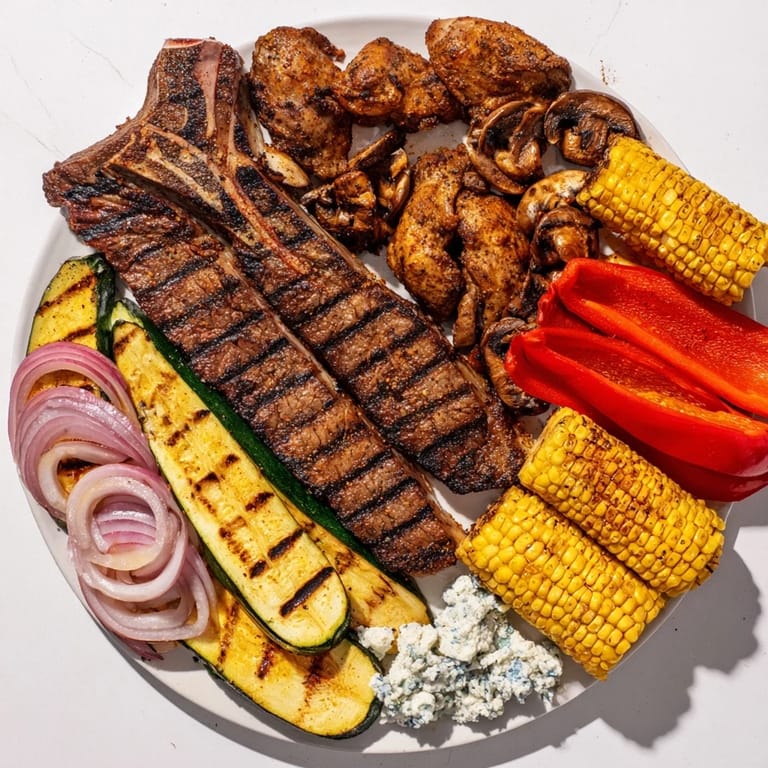
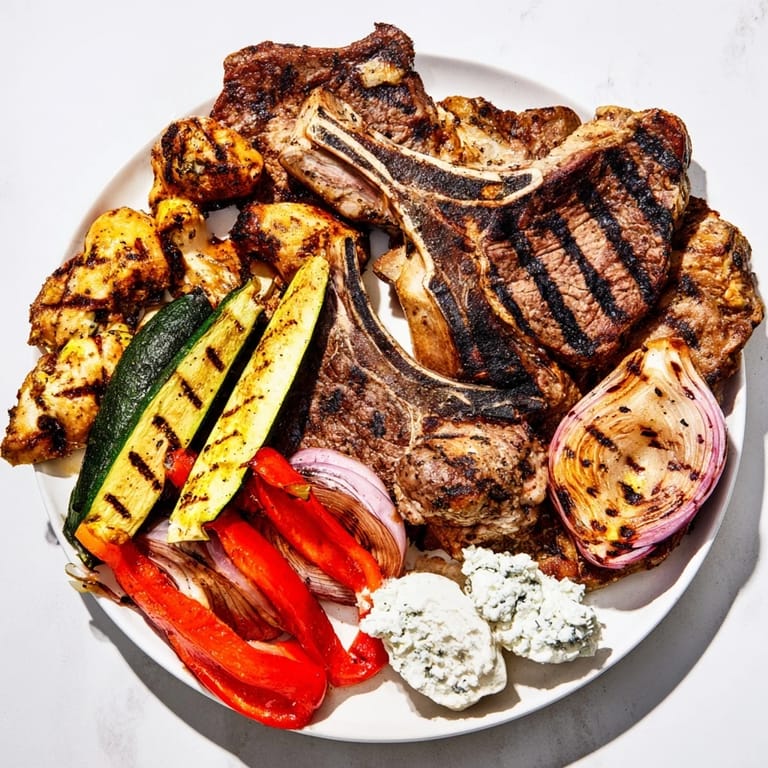
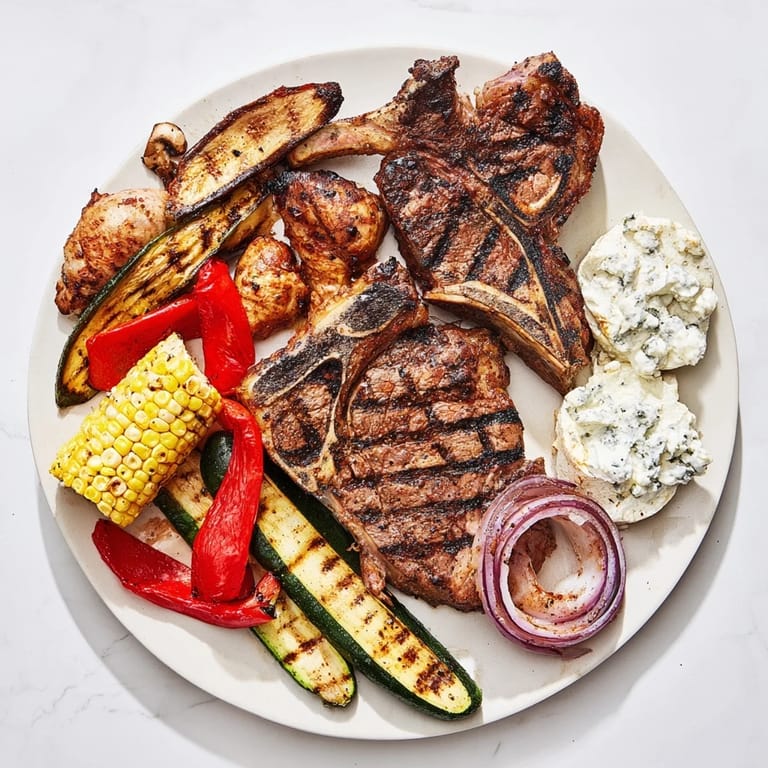
- Find your largest wooden board or platter—you want it to feel generous and abundant. Create distinct piles of meats and vegetables, arranging them so people can see everything at a glance. Nestle your three dips in bowls around the board, scatter bread slices between the piles, and toss the mixed greens over everything like a fresh, light garnish. The goal is for it to look like plenty, like no one's ever going to go hungry.
- Serve and celebrate:
- Bring it straight to the table while everything's still warm. Let your guests build their own plates, mixing and matching as they please. There's something powerful about giving people that control over their own meal.
 Pin It
 Years later, I still think about how that board brought people together—not because the food was pretentious or complicated, but because it was honest and abundant and it let everyone feel like they had a say in what they were eating. That's when I understood the real power of this kind of cooking: it's not about perfection, it's about generosity.
The Art of Building Your Perfect Board
The beauty of this recipe is that there's no wrong way to build your plate. Some people come at it from the dips first, anchoring everything around ranch or barbecue. Others start with the bread, using it as a vehicle for different combinations. The smartest eaters I know load up on the vegetables first—they're naturally lighter and let you taste the grilled char without the heaviness of back-to-back meat. Watch how your guests approach it. You'll learn something about what brings them joy on a plate.
Grilling Tips That Stick With You
Over time, you'll develop an instinct for this. You'll know your grill's personality—where it runs hot, where it's cooler, how long to leave things alone. Clean your grates with a stiff brush before you start cooking; burnt-on bits from last time will stick to new ingredients and taste bitter. Keep a small bowl of water nearby with a folded paper towel; if a flare-up happens, you can douse it safely. And listen to the sizzle when meat hits the grill. That sound tells you everything about temperature and readiness. The worst grilling happens when you're not paying attention; the best happens when you're fully present.
Making It Your Own
This board is built on a framework, but it's absolutely meant to bend to what you have and what your people love. I've made it with thick-cut sausages when I was feeding a casual crowd, and no one missed the beef. I've added thick slices of grilled pineapple because someone mentioned loving the sweet-smoky combination, and it became the conversation of the evening. Grilled asparagus fits beautifully if you want to add green vegetables. The three dips can become two or four depending on what's in your fridge. This is everyday cooking at its best—structured enough to feel intentional, flexible enough to feel natural.
- Consider adding grilled sausages or thick-cut pork belly for variation and richness.
- Swap in seasonal vegetables: asparagus in spring, thick tomato slices in summer, halved Brussels sprouts in fall.
- Mix your dips or add a fourth—maybe a chimichurri or garlic aioli if you're feeling ambitious.
 Pin It
 At its heart, this backyard board is about bringing people around something warm and abundant and real. It's food that says you care without saying it too loudly.
Recipe Questions & Answers
- → What types of meat are best for grilling on this platter?
Beef ribeye steaks, bone-in pork chops, and boneless chicken thighs work well for balanced flavors and cooking times.
- → How should the vegetables be prepared for grilling?
Slice zucchini diagonally, cut bell peppers into large strips, make thick onion rings, and husk corn before grilling for ideal texture and char.
- → What grilling techniques ensure meats are cooked evenly?
Grill meats in batches, following specific times for each cut to reach desired doneness while resting under foil for juiciness.
- → Can the dips be customized or replaced?
Yes, choose smoky, creamy, or tangy dips according to preference to complement the grilled flavors.
- → What sides accompany the grilled platter effectively?
Rustic toasted country bread and mixed baby greens provide texture contrasts and freshness.
- → Are there allergen considerations to keep in mind?
Dairy in dips and gluten in bread are common allergens; gluten-free bread substitutes are recommended as needed.