 Pin It
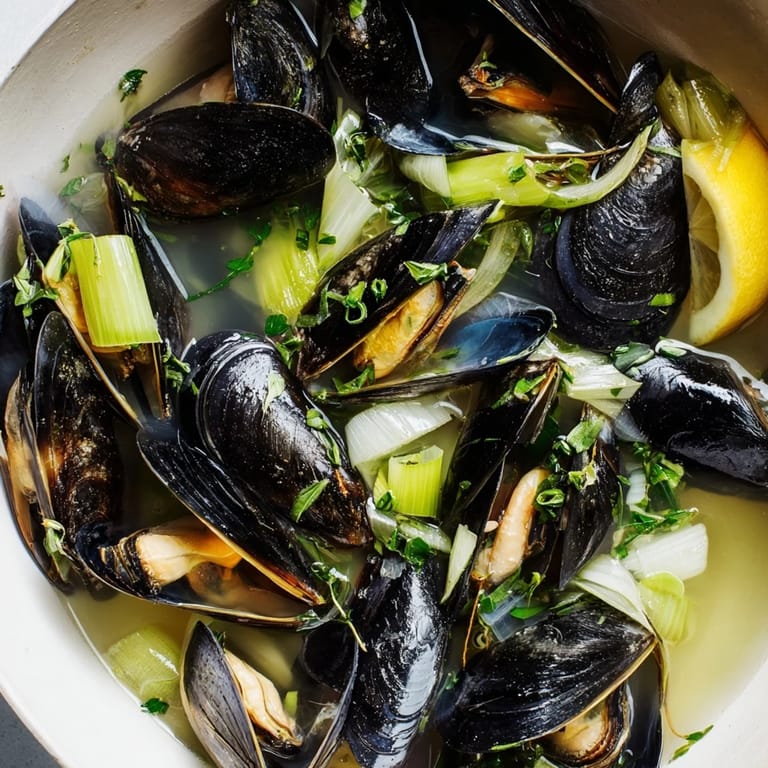
 There's something about standing over a steaming pot of mussels that feels like you're doing something continental and special, even though it's honestly one of the easiest things to cook. My first time making moules marinière was at a tiny apartment in Brussels, and I remember being surprised by how the wine and briny liquid created this golden-brown broth that tasted like the sea itself. A Belgian friend leaned against the counter and said the secret was not overthinking it—just fresh mussels, good wine, and patience. That stuck with me.
I made this for a dinner party once and watched my guests crack open shells and close their eyes at that first sip of wine and garlic broth—no one spoke for a solid minute. That's when I realized this dish has a quiet kind of magic. It's humble but somehow makes people feel like you've invited them somewhere fancy.
Ingredients
- Fresh live mussels, 2 kg (4.4 lbs): Look for tightly closed shells or ones that snap shut when tapped; open mussels before cooking mean they're dead and should be discarded. Buy them the same day you cook if possible.
- Shallots, 2 medium: Their sweetness mellows in the wine and becomes the backbone of the broth flavor.
- Garlic, 2 cloves: Minced fine so it dissolves into the liquid rather than leaving chunky bits.
- Leek, white part only, 1 small: It adds an underlying sweetness that you can't quite name but absolutely miss if it's gone.
- Celery, 2 stalks: A trick I learned: it rounds out the vegetable base and keeps the broth tasting balanced.
- Flat-leaf parsley, 1 small bunch: Stir it in at the very end so it stays bright green and tastes fresh, not cooked down.
- Fresh thyme and bay leaf: These are what make it taste like actual moules marinière and not just steamed mussels in wine.
- Dry white wine, 300 ml (1 1/4 cups): Use something you'd actually drink; the wine is the star of the broth.
- Olive oil, 2 tbsp: Just enough to soften the vegetables without making the broth greasy.
- Freshly ground black pepper and sea salt: Mussels release their own salt into the broth, so taste before adding more.
- Lemon wedges, to serve: A squeeze brightens everything at the last moment.
Tired of Takeout? 🥡
Get 10 meals you can make faster than delivery arrives. Seriously.
One email. No spam. Unsubscribe anytime.
Instructions
- Prep the mussels:
- Run them under cold water and scrub each shell with your fingers or a stiff brush, pulling off the dark stringy beard if it's still attached. Discard any that are cracked open or refuse to close—they're dead and shouldn't be cooked.
- Build the flavor base:
- Heat olive oil in a large pot over medium heat, then add shallots, garlic, leek, and celery. Let them soften for 3–4 minutes, stirring occasionally, until the kitchen smells like a French kitchen and the vegetables start to turn translucent.
- Add the aromatics:
- Scatter in the thyme sprigs and bay leaf, then pour in the white wine. Bring it to a gentle simmer so you can see the smallest bubbles breaking the surface.
- Steam the mussels:
- Dump in all your cleaned mussels, cover the pot tightly with a lid, and turn the heat up to high. Every minute or so, lift the lid and give the pot a shake so the mussels cook evenly. You'll hear them clicking and clacking inside.
- Watch for the opening:
- After about 5–7 minutes, most mussels will have popped open, releasing that briny sweetness into the broth. Discard any that stubbornly stay closed; they're not worth the risk.
- Finish and serve:
- Remove from heat, stir in the chopped parsley, crack some fresh black pepper over everything, and taste the broth. Add a pinch of salt only if it needs it. Ladle mussels and broth into deep bowls and serve immediately with lemon wedges and crusty bread for soaking.
 Pin It
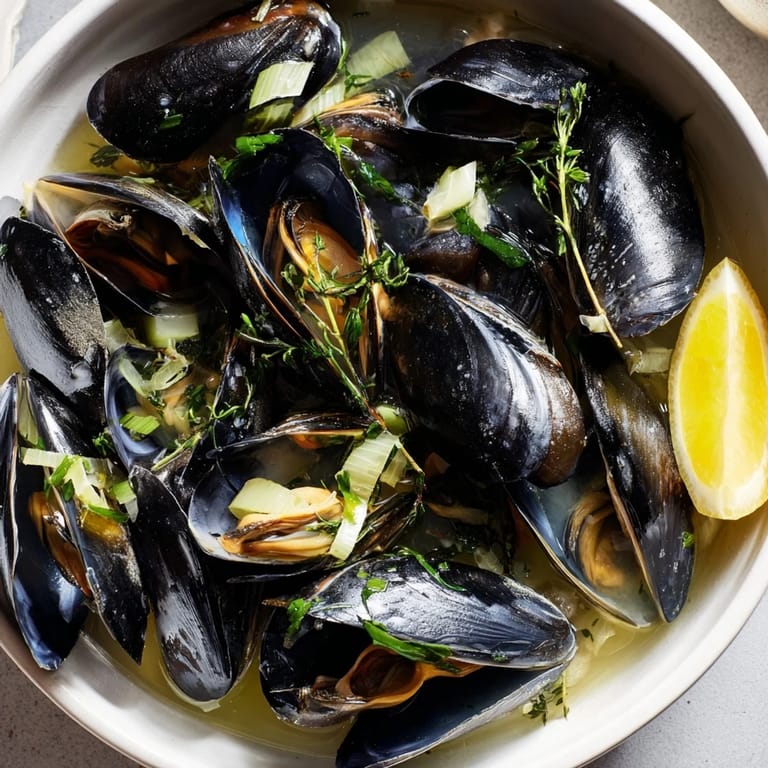
 There's a moment when you lift the lid and the steam hits your face—that's when you know they're done. It's a small thing, but it's the moment this dish stops being a recipe and becomes a memory.
Why Fresh Mussels Matter
Frozen mussels or jarred ones just don't have the same texture or taste. Fresh mussels should feel heavy and slightly damp, and when you smell them they should smell like the ocean, not fishy or sulfurous. I learned this the hard way by trying shortcuts, and every time the dish fell flat. Spend the extra few euros on genuinely fresh mussels and you'll taste the difference immediately.
The Broth Is Everything
Some people think the mussels are the whole point, but honestly, the broth is where all the magic happens. It's what ties everything together and what people will remember. Don't waste it—serve it in bowls deep enough to hold plenty, and always have bread nearby for dunking.
Variations and Pairings
Once you master the basic version, you start seeing possibilities everywhere. I've made it with a splash of cream for richness, or added a knob of butter at the end for silkiness. Some nights I want it with Belgian fries and mayonnaise, the way they serve it in Antwerp. Other times it's just bread and good wine and that's enough. This dish is forgiving and wants to become what you need it to be.
- Add 2 tablespoons unsalted butter at the very end if you want the broth to taste richer and creamier.
- Serve alongside hot Belgian fries or thick slices of crusty bread for soaking up every drop.
- A cold white wine or crisp Belgian beer is the only companion this meal needs.
 Pin It
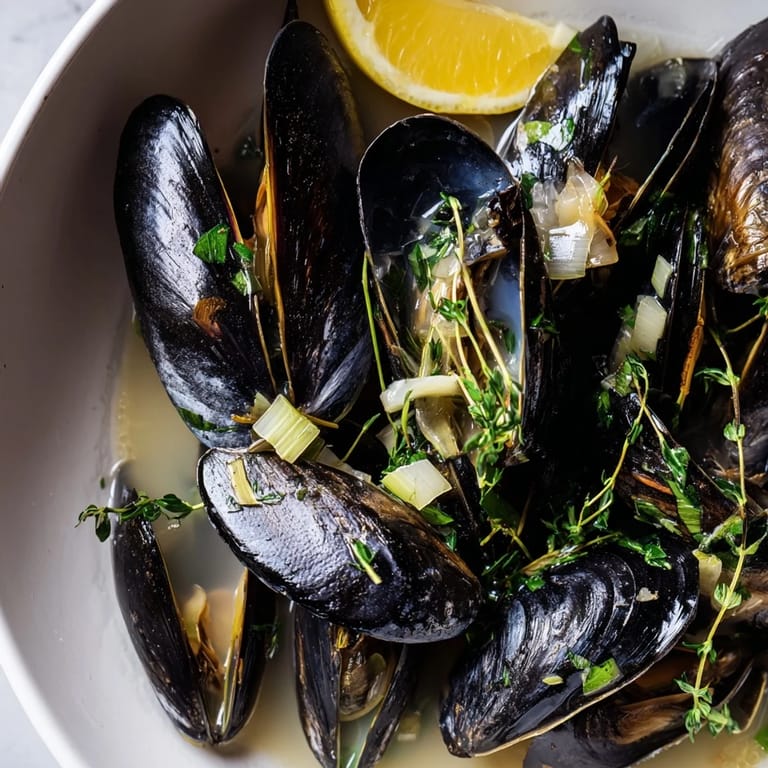
 This is the kind of dish that feels fancier than it actually is, which means you'll find yourself making it whenever you want to feel a little bit European. It's simple, honest, and somehow always satisfying.
Recipe Questions & Answers
- → How do I clean mussels properly?
Rinse mussels under cold running water, scrub shells to remove debris, and discard any that are open or broken.
- → What herbs enhance the flavor of moules marinière?
Thyme, bay leaf, and flat-leaf parsley add fragrant, earthy notes balancing the briny mussels.
- → Can I use a substitute for shallots?
A small yellow onion can replace shallots if unavailable, providing a similar mild sweetness.
- → What is the best way to serve this dish?
Serve in deep bowls with broth and lemon wedges, accompanied by crusty bread or Belgian fries to soak up flavors.
- → How long should mussels be cooked to avoid toughness?
Steam mussels for about 5–7 minutes until they open; overcooking can make them chewy and dry.