 Pin It
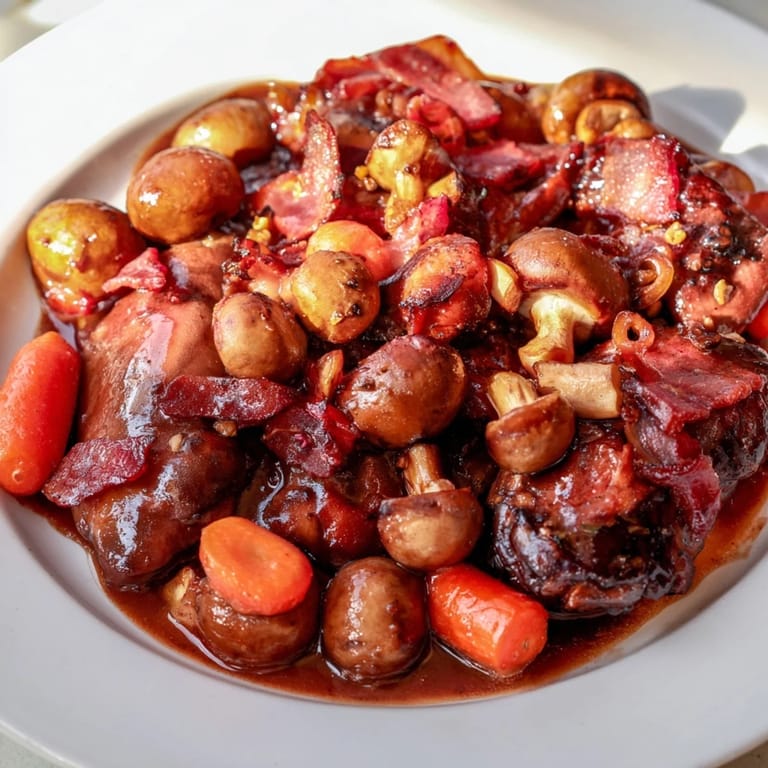
 I discovered coq au vin quite by accident one winter evening when a French cookbook fell open on my kitchen counter. The photograph of that mahogany-dark stew caught me immediately—something about the way the light caught the wine-glossed chicken pieces felt like an invitation. It wasn't until I actually made it that I understood why this dish has endured for centuries: it transforms simple ingredients into something that tastes like someone's been tending it all day, even though most of the work happens while you're doing something else entirely.
I remember serving this to a friend who'd just moved to the neighborhood, unsure if she'd stay long or drift back to her old city. Something about the ritual of it—the slow cooking, the way the bacon crisped first like a little ceremony, the smell building and building—made the evening feel important. She asked for the recipe before dessert, and I realized then that good food is just a quiet way of saying you matter, that I wanted her to stay.
Ingredients
- Chicken, cut into 8 pieces: Use a whole bird if you can find one—the bones and skin contribute incredible flavor to the braising liquid, and cutting it yourself costs half the price of pre-cut pieces.
- Smoked bacon or pancetta: Render this first and your entire pot will taste like you know what you're doing, even if this is your first time.
- Pearl onions, peeled: Yes, they're tedious to peel, but they stay whole and sweet through the long cook—a small effort that makes a visible difference.
- Cremini or button mushrooms: Sauté these separately just before serving so they stay tender instead of turning to mush in the braise.
- Carrots, bay leaves, and fresh thyme: These are your flavor backbone—don't skip the fresh thyme or substitute dried, it tastes completely different.
- Dry red wine: Use something you'd actually drink, not the cheapest bottle on the shelf—Burgundy or Pinot Noir will make the sauce taste sophisticated.
- Chicken stock and tomato paste: The stock keeps the sauce from becoming too winey, and the tomato paste adds depth that balances all that acidity.
Tired of Takeout? 🥡
Get 10 meals you can make faster than delivery arrives. Seriously.
One email. No spam. Unsubscribe anytime.
Instructions
- Dry your chicken and season generously:
- Pat each piece carefully with paper towels—any moisture that clings will steam instead of brown, and browning is where the magic begins.
- Crisp the bacon first:
- Listen for that sizzle and let it go until the edges curl and darken. This takes about 5 to 7 minutes, and you'll know it's right when the kitchen suddenly smells smoky and alive.
- Brown the chicken in batches:
- Don't crowd the pot—let each piece spend a couple minutes on each side until the skin turns golden and the meat underneath starts to seal. You're building flavor here, not cooking it through.
- Sauté the vegetables briefly:
- The carrots, pearl onions, and garlic should just turn golden at the edges, about 5 minutes. This softens them slightly and helps them release their sweetness into the pot.
- Make a paste with tomato and flour:
- Stir these together for just a minute until they combine and darken slightly. This small step acts like glue, helping the sauce coat everything evenly later.
- Combine everything and braise low and slow:
- Return the chicken and bacon to the pot, pour in the wine and stock, add the bay leaves and thyme sprigs, then bring it to a gentle simmer. Cover and let it go for about 90 minutes until the chicken is so tender it nearly falls from the bone.
- Brown the mushrooms separately in a skillet:
- While the chicken braises, get your butter and oil hot and let the mushroom pieces sit still for a minute before stirring—they'll develop a gorgeous golden crust that way.
- Finish by reducing the sauce uncovered:
- Remove the lid for the last 15 minutes so the braising liquid tightens into something silky and concentrated. Stir in those sautéed mushrooms, taste, and adjust the seasoning until it tastes like restaurant food.
 Pin It
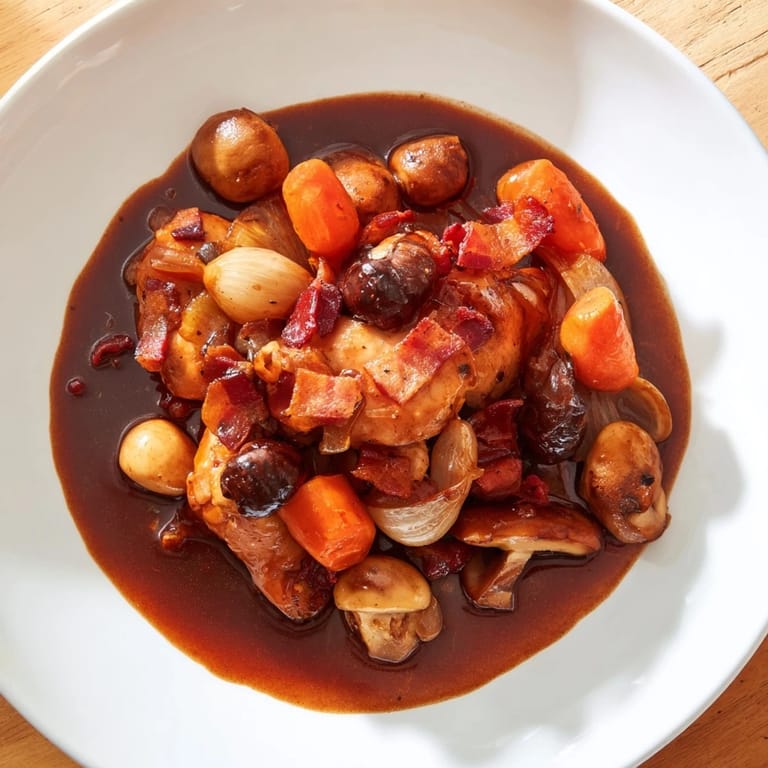
 There's a particular moment, maybe 45 minutes into the braise, when you lift the lid just to check and the steam rolls out carrying this incredibly deep wine and herb smell—it's the moment I know everything is going to be okay. That smell is proof that time and heat and patience are actually working, that you don't need to do anything fancy to make something beautiful.
What Makes This Feel Like Home
Coq au vin isn't show-off cooking, even though it looks impressive. It's the kind of dish that works because it respects its ingredients and doesn't rush them. The wine softens the chicken, the bacon seasons everything without overpowering it, and the long simmer lets all those flavors find each other. There's something very honest about that.
How to Know When It's Really Done
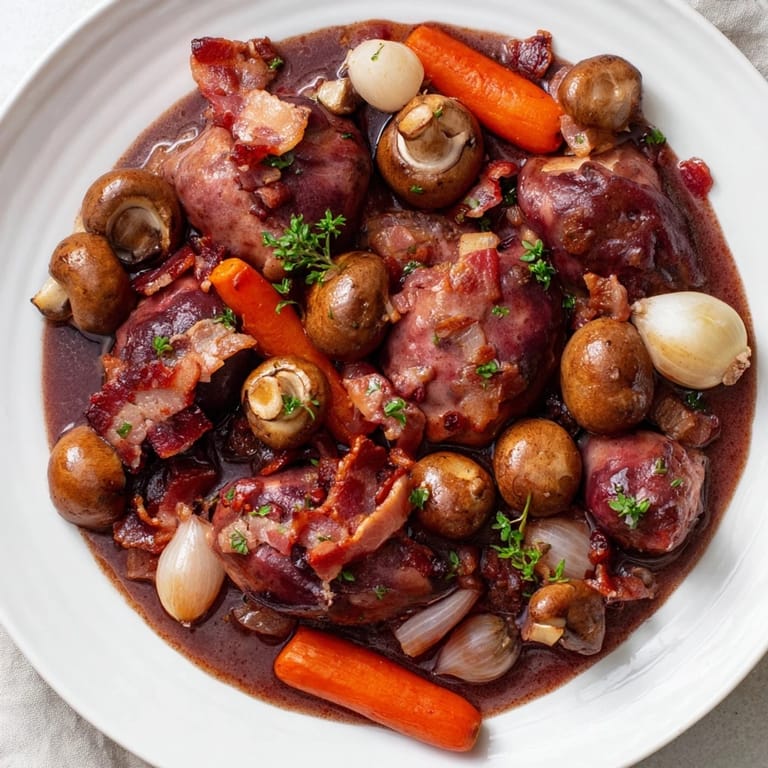
The chicken should be so tender that it practically slides from the bone with just a gentle push of your spoon. The sauce should coat the back of that spoon in a thin, glossy layer—not thin and watery, and definitely not thick like gravy. The color should be a deep, warm mahogany, and when you taste it, the wine should taste integrated, not sharp or raw.
Serving and Storage
Serve this in wide, shallow bowls with plenty of sauce and crusty bread for mopping, or alongside buttered noodles or mashed potatoes. It tastes even better the next day after everything has mellowed and deepened together, so don't hesitate to make it ahead. This keeps beautifully in the refrigerator for three days and freezes well for up to a month—just reheat gently so the sauce doesn't break.
- If you're adding brandy, warm it first and carefully set it alight just for a few seconds before adding it to the mushrooms for a subtle depth.
- Chicken thighs work beautifully here and might actually be preferable since they stay moist in a long braise.
- Serve with a simple green salad to cut through the richness, or skip it entirely and let the bread do that job.
 Pin It
 This is the kind of recipe that teaches you something every time you make it, that gets easier and more confident with repetition. It's one of those dishes that reminds you why cooking for people you care about matters.
Recipe Questions & Answers
- → What type of wine works best for braising?
Dry red wines such as Burgundy or Pinot Noir are ideal as they add depth and complement the rich flavors of the dish.
- → Can I use chicken thighs instead of a whole chicken?
Yes, chicken thighs provide great flavor and remain tender during the long braising process.
- → Why add flour to the dish?
Flour helps thicken the sauce, creating a smooth and velvety texture that coats the chicken and vegetables.
- → How should the mushrooms be prepared?
Mushrooms should be sautéed separately until browned to develop their flavor before adding to the stew near the end of cooking.
- → What herbs are traditionally used in this dish?
Fresh thyme and bay leaves are classic choices that enhance the aromatic profile of the dish.
- → What are good side options to serve?
Serve with crusty French bread, buttered noodles, or mashed potatoes to soak up the rich sauce.